by Kobus van der Merwe | Oct 14, 2025 | Blog, Couples, Dialogue, Struggles
When Two Truths Collide
She didn’t even remember how the argument began. One minute they were discussing something as trivial as weekend plans, and the next she was in tears, her voice shaking with frustration. Across the kitchen, her husband’s face was flushed with anger and hurt. In that charged moment, it felt like they were living in two different worlds. Each was utterly convinced of their own point of view, and each felt painfully misunderstood by the other.
This wasn’t the first time a simple conversation had spiraled into a storm. It was becoming alarmingly routine. Last week, a casual decision about what to cook for dinner somehow exploded into an accusation that he never helped out. A month before, their anniversary night ended in icy silence. Tonight followed the same script: she voiced a need; he heard criticism. He defended himself; she raised her voice, desperate to be heard. Both ended up feeling attacked, unappreciated, and alone.
Two different truths lived under the same roof, and each truth was entirely real.
On this night, the pattern reached a breaking point. “I can’t do this anymore,” she cried. “You don’t even care how I feel!” His eyes flashed as he threw up his hands. “How can you say that? Nothing I do is ever enough for you!” The words hung in the air, heavy with years of resentment and guilt. He bit his lip to hold back tears. She stood frozen, heart pounding, aching at the sight of his back turned to her.
In the dark of their bedroom, neither could sleep. Each replayed the fight in their mind, feeling both justified and ashamed. She longed to be understood. In her reality, if he truly loved her, he would be more present. He, staring at the ceiling, felt guilty and not enough. In his reality, he worked hard because he cared—and braced for criticism because nothing seemed to satisfy.
Sometime past midnight she whispered, “I don’t want to fight like this anymore.” He exhaled, “Neither do I.” She took a breath and said, “I’m afraid I matter less to you than everything else.” He turned toward her, tears gathering. “You matter more than anything,” he said. “I just feel like I’m failing you.”
We might need help—there has to be a new way to hear each other.
In that fragile exchange, something shifted. For the first time in a long time, they were hearing each other’s pain instead of the echo of their own. They held hands in the dark and cried softly. It wasn’t a magic fix, but it was a turning point—their first real alignment in months.
By morning, nothing external had changed, but the posture of their hearts had. Over coffee he said, “We might need help.” She nodded. The idea of a guided process—somewhere safe to practice hearing each other—felt less threatening than another year of the same loop. They promised to fight for the relationship, not against each other.
That promise became their North Star. They were still two different people with two different truths, but they discovered that both could be honored. The goal was no longer winning; it was understanding. And that single shift began to change the feel of their home—warmer, steadier, more connected.
Fight for your relationship, not against each other.
Honoring both realities is the first brave step toward healing.
by Kobus van der Merwe | Oct 14, 2025 | Blog, Couples, Dialogue, Struggles
When Two Truths Collide
She didn’t even remember how the argument began. One minute they were discussing something as trivial as weekend plans, and the next she was in tears, her voice shaking with frustration. Across the kitchen, her husband’s face was flushed with anger and hurt. In that charged moment, it felt like they were living in two different worlds. Each was utterly convinced of their own point of view, and each felt painfully misunderstood by the other.
This wasn’t the first time a simple conversation had spiraled into a storm. It was becoming alarmingly routine. Last week, a casual decision about what to cook for dinner somehow exploded into an accusation that he never helped out. A month before, their anniversary night ended in icy silence. Tonight followed the same script: she voiced a need; he heard criticism. He defended himself; she raised her voice, desperate to be heard. Both ended up feeling attacked, unappreciated, and alone.
Two different truths lived under the same roof, and each truth was entirely real.
On this night, the pattern reached a breaking point. “I can’t do this anymore,” she cried. “You don’t even care how I feel!” His eyes flashed as he threw up his hands. “How can you say that? Nothing I do is ever enough for you!” The words hung in the air, heavy with years of resentment and guilt. He bit his lip to hold back tears. She stood frozen, heart pounding, aching at the sight of his back turned to her.
In the dark of their bedroom, neither could sleep. Each replayed the fight in their mind, feeling both justified and ashamed. She longed to be understood. In her reality, if he truly loved her, he would be more present. He, staring at the ceiling, felt guilty and not enough. In his reality, he worked hard because he cared—and braced for criticism because nothing seemed to satisfy.
Sometime past midnight she whispered, “I don’t want to fight like this anymore.” He exhaled, “Neither do I.” She took a breath and said, “I’m afraid I matter less to you than everything else.” He turned toward her, tears gathering. “You matter more than anything,” he said. “I just feel like I’m failing you.”
We might need help—there has to be a new way to hear each other.
In that fragile exchange, something shifted. For the first time in a long time, they were hearing each other’s pain instead of the echo of their own. They held hands in the dark and cried softly. It wasn’t a magic fix, but it was a turning point—their first real alignment in months.
By morning, nothing external had changed, but the posture of their hearts had. Over coffee he said, “We might need help.” She nodded. The idea of a guided process—somewhere safe to practice hearing each other—felt less threatening than another year of the same loop. They promised to fight for the relationship, not against each other.
That promise became their North Star. They were still two different people with two different truths, but they discovered that both could be honored. The goal was no longer winning; it was understanding. And that single shift began to change the feel of their home—warmer, steadier, more connected.
Fight for your relationship, not against each other.
Honoring both realities is the first brave step toward healing.
by Kobus van der Merwe | Sep 16, 2025 | Blog, Couples, Struggles
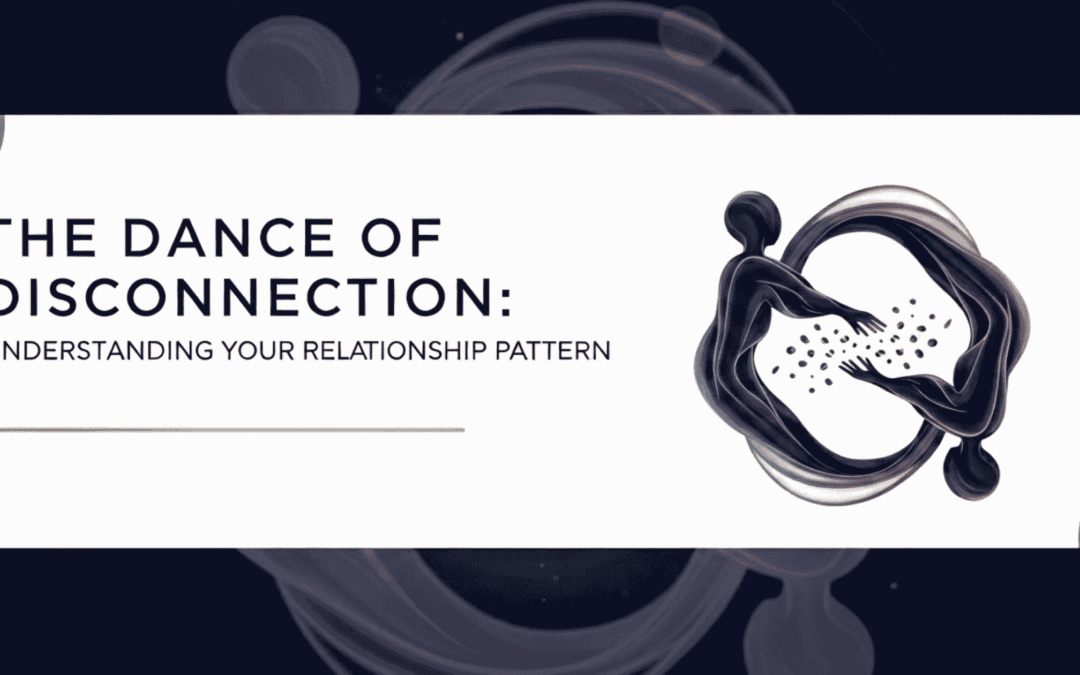
The Dance of Disconnection: Understanding Your Relationship Pattern
Every couple has a “dance”—a predictable pattern that emerges during conflict. In one intensive session, the therapist asked a couple to observe themselves as if watching strangers in an Italian restaurant. What they saw was revealing: as one partner became more animated and frustrated, the other withdrew further, rolling his eyes and becoming silent. This only intensified her frustration, creating an escalating cycle both knew well but felt powerless to stop.
This “dance” isn’t unique to them. Most couples develop a signature pattern where one person’s coping mechanism triggers the other’s wounds, creating what Imago therapy calls the “power struggle.” In this case, her emotional expressiveness—developed in childhood to be heard—met his withdrawal pattern, learned early as a way to avoid conflict in his family of origin.
Her explosiveness wasn’t aggression—it was panic at feeling shut out.
The therapist explained a crucial concept: “When you fight from disconnection, or when you fight from connection, it’s two completely different fights.” The couple realized they’d been fighting from a place of feeling disconnected, each interaction widening the gulf between them. She felt abandoned by his silence; he felt attacked by her intensity. Neither recognized that beneath these behaviors was a desperate attempt to connect.
During the intensive, they discovered that his withdrawal wasn’t indifference—it was overwhelming anxiety about saying the wrong thing. Her explosiveness wasn’t aggression—it was panic at feeling shut out. Once they understood the dance, they could see how perfectly their wounds fit together, like a lock and key designed to recreate their childhood experiences.
All behavior in relationship, even the most destructive-seeming, is an attempt at connection.
The therapist introduced a powerful reframe: all behavior in relationship, even the most destructive-seeming, is an attempt at connection. His silence was saying, “I need safety to speak.” Her intensity was saying, “I need to know you’re here with me.” Neither could hear the other’s hidden message through the static of their triggered nervous systems.
They had about eighteen seconds between trigger and full activation of their defensive patterns.
Breaking this pattern requires conscious intervention. The couple learned to recognize when they were entering their dance—the slight tension in the air, the familiar phrases, the bodily sensations that preceded their pattern. They discovered they had about eighteen seconds between trigger and full activation of their defensive patterns. In that brief window lay their power to choose differently.
The shift from ‘you’re the problem’ to ‘we have a pattern that’s the problem’ changed everything.
The breakthrough came when they realized they weren’t each other’s enemy but were actually allies against a common foe: the pattern itself. “We’re dancing the dance of the disconnected,” the wife observed. This shift from “you’re the problem” to “we have a pattern that’s the problem” changed everything.
They began to develop interruption strategies. When she felt herself getting activated, she learned to say, “I’m starting to feel disconnected. Can we pause and reconnect?” When he felt himself withdrawing, he practiced saying, “I’m getting overwhelmed. I need a moment, but I’m not leaving.” These simple phrases began to interrupt their dance mid-step.
Understanding your dance doesn’t mean you’ll never step into it again. But it does mean you can recognize it faster, name it without shame, and choose to change the music. Every couple has a default dance—the question is whether you’ll remain unconscious partners in it or become conscious choreographers of something new.

by Kobus van der Merwe | Aug 26, 2025 | Blog, Couples, Dialogue, Struggles
Blame might feel satisfying for a moment, but it drives a wedge between you and your partner.
Stuck in the Blame Game
Does this sound familiar? One of you says, “This is your fault,” and the other fires back with, “No, it’s yours!” Every argument becomes a tennis match of blame – and no one ever really wins. When conflicts always turn into pointing fingers, both partners walk away feeling hurt, misunderstood, and defensive. It’s natural to want to defend yourself when you feel attacked. Unfortunately, that instinct to blame or criticize back only fuels the fire. You end up in a loop where the original issue gets lost amid the accusations. The result? More distance, not resolution.
Living in a blame game is exhausting. You might dread bringing up issues because you know it will spiral into “who’s fault is it this time?” Instead of feeling like a team, you start to feel like opponents. Blame can even erode trust and safety in the relationship – after all, it’s hard to open up to someone if you fear they’ll just make you feel wrong. The tragedy is that beneath the blame, there’s usually pain and longing. You actually want to be heard and cared for, but it comes out as an attack. So how do you break this toxic cycle?
A No-Blame Approach with Imago Couples Dialogue
The Imago Couples Dialogue fundamentally changes the tone of your conversations by taking blame off the table. It creates a structured way to talk where criticism and shame are replaced with curiosity and respect. When you and your partner sit down for an Imago Dialogue, you both agree to certain ground rules that make blame virtually impossible. One rule is that the person speaking (the Sender) talks about their own feelings and experiences – not their partner’s faults. Instead of saying, “You never listen to me,” the Sender might say, “I feel lonely and unheard when I’m not listened to.” See the difference? The focus shifts from accusing your partner to sharing your inner experience.
The other partner’s role (the Receiver) is to listen and mirror back what they heard, without adding any commentary or defense. In Imago Dialogue, the Receiver isn’t allowed to say, “Well, here’s why that’s your fault,” or anything of the sort. They simply reflect the Sender’s words and feelings as accurately as possible, then validate (acknowledge that the Sender’s perspective makes sense) and offer empathy. This structure keeps the conversation safe. No one is blaming or judging; you’re each trying to understand the other. It might feel awkward at first to hold back your usual retorts, but that’s where the beauty lies – the usual blame game can’t take hold when you follow the dialogue process.
Breaking the Cycle and Healing Together
When you remove blame from your interactions, something amazing happens: both of you can finally lower your guard. If you’re not busy defending yourself from attack, you can actually listen. Imago Dialogue helps you see the hurt or concern behind your partner’s complaints, rather than focusing on the way it was delivered. For example, instead of hearing “it’s your fault” and bristling, you might hear “my partner is really hurting and needs my support.” That shift in perspective is everything. It turns an argument into an opportunity to care for each other.
As you practice communicating this way, you start to feel safer with each other. The defensive walls come down because you learn that it’s safe to express feelings – you won’t be blamed or shamed for how you feel. And when you’re the one listening, you realize that hearing your partner’s feelings doesn’t mean you’re a bad person; it just means they trust you enough to be vulnerable. Each dialogue you have without lapsing into blame builds a little more trust. Over time, that trust grows into a new norm: you both know you’re on the same side, tackling challenges together instead of attacking each other.
In fact, couples who commit to a blame-free dialogue often find that conflicts get resolved faster and more peacefully. When the negativity is out of the way, you can focus on solutions. You can say, “Okay, how do we fix this?” rather than “who caused this?” Imago Dialogue encourages you to also incorporate positive language – like appreciations and requests. Rather than criticizing what went wrong, you learn to ask for what you need in a loving way. Replacing negativity with positive intention doesn’t mean ignoring problems; it means addressing them with kindness instead of criticism. The difference in outcomes is huge: instead of lingering bitterness, you start feeling understood and supported.
From Blame to Empathy – Give It a Try
Escaping the blame game is one of the best things you can do for your relationship. It frees you from that exhausting cycle of attack and defend. Imago Couples Dialogue is the advanced tool that makes this possible, by giving you a step-by-step process to communicate with zero negativity. Imagine what it would be like to talk about a tough issue and actually feel closer afterward, rather than resentful. That’s the power of shifting from blame to empathy.
You can experience this shift for yourselves by trying the Imago Dialogue process. To make it easier, we offer a free online dialogue tool that guides you through it. It provides prompts so you can practice speaking and listening without blame or interruption. If every argument has been a blame game so far, it’s time for a new game plan. Try the free online Imago Couples Dialogue tool at https://imagorelationship.co.za/dialogue/. You’ll discover that when the blame stops, real understanding begins – and with it, a happier, stronger connection.
“Imago Dialogue replaces the blame game with a safe space where both of you can be heard without judgment.
When you stop blaming and start listening, you transform arguments into opportunities for understanding.
Removing negativity isn’t about ignoring problems – it’s about tackling them without attacking each other.

by Kobus van der Merwe | Aug 19, 2025 | Blog, Couples, Dialogue, Struggles
Same Fight, New Day – How Imago Dialogue Breaks Repeating Conflict
Stuck in a Conflict Loop
Maybe it’s the topic of money, or chores, or the kids – whatever it is, you know the script by heart now. One of you says the triggering comment, the other reacts, and off you go into the same fight you had yesterday, and last week, and last month. It might have slight variations, but it always ends the same way: hurt feelings, raised voices, and zero resolution. It’s like the movie Groundhog Day, but instead of waking up to the same song, you’re waking up to the same argument. It’s disheartening and draining. You both wonder, “Why are we still stuck on this? Are we ever going to get past it?”
The reason these fights keep happening is often that the real issue never gets truly addressed. We tend to fight about surface things when something deeper is at play. For example, the nightly squabble about who does the dishes might actually be about one partner feeling unappreciated or the other feeling controlled. When those underlying feelings aren’t acknowledged, the conflict just finds a new way to pop up again. Without realizing it, you both might be caught in a cycle of triggering each other’s old wounds or unmet needs. So how do you break free from this loop?
Finding the Real Issues with Imago Dialogue
Imago Couples Dialogue is like a key that unlocks what’s really going on beneath those repeat fights. When you engage in an Imago Dialogue about a recurring issue, the structured format helps both of you slow down and dig deeper. Instead of yelling or talking in circles, you take turns. As the Sender, you get to fully express what you feel and why you feel it, with the safety of knowing you won’t be interrupted or dismissed. As the Receiver, you listen carefully and mirror back what you heard, which forces you to really take in your partner’s words rather than preparing your comeback. This process often reveals insights that were missed in all the previous rushed arguments.
For example, during a dialogue, one partner might finally say, “When you ignore the budget we agreed on, I feel like my opinions don’t matter.” In a normal fight, that vulnerable admission might never come out – it would just stay buried under angry remarks like “You’re so irresponsible with money!” But Imago Dialogue encourages that kind of sharing of core feelings. And when the other partner hears it mirrored back (“You feel like I don’t value your input when I overspend”), a lightbulb can go off. Suddenly, you’re not arguing about dollars and cents; you’re talking about feeling valued and respected. That’s a conversation that can actually lead somewhere productive.
Breaking the Cycle
As you continue to use Imago Dialogue for these recurring issues, you’ll start to see the cycle breaking. Why? Because you’re finally addressing the root causes. Instead of re-enacting the same fight, you’re problem-solving together. The dialogue process fosters empathy – when you hear your partner’s deeper feelings (and not just their angry voice), it softens your stance. You might think, “I had no idea they felt that way.” In turn, when your partner feels heard and understood, their need to keep fighting about the issue diminishes. The fight no longer has a reason to repeat, because the underlying pain is being healed.
Another benefit is that Imago Dialogue helps you create new patterns of communication. Each time you successfully navigate a tough topic with this method, you’re reinforcing a positive way of handling conflict. It gets easier to do it again next time. You might even pre-empt a fight by saying, “Hey, can we dialogue about this? I don’t want us to spiral.” That’s huge – it means you’re gaining control over the pattern instead of the pattern controlling you. Over time, the phrase “same fight, new day” will no longer apply to your life. You’ll have new days with new conversations – ones that actually move you forward.
From Repeat Fights to Real Resolutions
Being caught in a loop of fights is miserable, but it’s not a life sentence. With conscious effort and the right tools, you can rewrite the script. Imago Couples Dialogue is the advanced tool that can help you do just that. It takes the energy you’ve been spending on fighting and redirects it towards understanding and resolution. Imagine the relief of finally saying, “We solved it. We’re not fighting about that anymore.” It’s possible!
To start breaking your own cycle of repeat conflicts, try using the Imago Dialogue for one of your common fights. Our free online tool (available at https://imagorelationship.co.za/dialogue/) can guide you through it step by step. Pick a quiet time, set aside the usual debate, and follow the dialogue format. You’ll be amazed at how different it feels to actually hear each other. Once you experience a real resolution, you won’t want to go back to the old fight-every-day routine.
“If every day feels like a rerun of the last argument, it’s a sign something deeper is crying out to be addressed.”
“Imago Dialogue helps you uncover what’s really driving the conflict, so you can fix the problem instead of fighting around it.”
“Repeating fights aren’t about the dishes or the laundry – they’re about feeling unheard or unvalued. Dialogue gets you to that truth.”
“When you finally feel understood by your partner, that ‘same old fight’ loses its power. It doesn’t need to happen anymore.”

by Kobus van der Merwe | Aug 1, 2025 | Blog, Couples, Dialogue, Struggles
“Losing the spark doesn’t mean you don’t love each other; it means you’ve lost the feeling of being deeply connected.”
From Sizzle to Fizzle
There was a time when you couldn’t keep your hands off each other, when just talking for hours felt exhilarating. But now… the days are routine, the nights are quiet, and it feels like that spark you once had has dimmed. Many couples hit this point where the relationship shifts from passionate to polite, from soulmates to roommates. It’s not that you don’t care about each other – you might still have deep love – but the energy, the playfulness, the intimacy seems to have faded. You might ask yourselves, “Where did we go wrong? Why don’t we feel in love like before?”
Losing the spark can happen for lots of reasons. Daily life stresses, kids, work, or just falling into a comfort zone can all dull the flame. Often, it’s also a buildup of little disconnects over time – unresolved conflicts, unspoken feelings, or simply not spending quality time truly seeing each other. Without realizing it, you start to drift emotionally. The good news is that this drift is reversible. The spark isn’t gone – it’s just buried under the dust of everyday life and unaddressed feelings. With some conscious effort, you can reignite it. And one of the best ways to start is by rebuilding your emotional connection through meaningful dialogue.
How Imago Dialogue Rekindles Connection
Imago Couples Dialogue might not sound romantic at first – it’s a structured conversation technique – but its effects can be incredibly intimate. That’s because real romance thrives on emotional safety and understanding. When you sit down for an Imago Dialogue, you create a space where each of you can share from the heart without fear of criticism or rejection. You take turns being vulnerable – one speaks, the other listens deeply and mirrors back what they hear. This deep listening and validation are essentially acts of love. They send the message, “You matter to me. I want to know you, all of you.”
As you use the dialogue to discuss not just problems but also positive feelings and hopes, you may find yourselves reconnecting in ways that surprise you. Imago Dialogue isn’t only for hard topics; you can use it to tell each other what you appreciate, to share dreams for the future, or to reminisce about a happy memory. Making time for these affirmative dialogues is like stoking the embers of a fire – it brings warmth back into your relationship. Many couples rediscover their partner’s wonderful qualities during these conversations. You start thinking, “Oh yeah, I fell in love with this person for a reason.” That awareness alone can start to rekindle affectionate feelings.
Also, when you tackle any lingering resentments or misunderstandings using the dialogue, you clear the air that’s been dampening your passion. Clearing up negativity makes room for positive connection. Imagine finally feeling understood about something that’s bothered you for years – the relief and gratitude from that can translate into wanting to be closer again, emotionally and physically. Emotional intimacy is the foundation of physical intimacy. When you feel connected emotionally, holding hands, hugging, and more tender moments begin to flow naturally once again.
Lighting the Fire Again
No matter how quiet or cold things feel right now, remember that you lit that fire once before – and you can light it again. It might not look exactly like it did in the beginning (relationships evolve, after all), but it can be deeper and more sustaining. Imago Couples Dialogue is the advanced communication tool that can guide you back to each other. By routinely setting aside time to converse in this mindful, heart-to-heart way, you continuously fuel the flame. It’s like tending a campfire: a little attention and care keeps the warmth going.
If you’re yearning to reconnect, start by having a dialogue about it. Even saying, “I miss us,” and hearing your partner mirror that can be a powerful spark. Use our free online Imago Dialogue tool at https://imagorelationship.co.za/dialogue/ to help structure this tender conversation. Step by step, as you rebuild emotional closeness, you’ll likely find the laughter, the flirting, and the affection returning as well. The spark isn’t lost – it’s waiting for you to fan it back into a bright, loving flame.
Intimacy isn’t just about romance – it starts with feeling seen and valued. Imago Dialogue brings that feeling back.
As you share and listen on a deeper level, you begin to see your partner with fresh, loving eyes – that’s the spark reigniting
Couples often find that empathy is the new foreplay – when you truly understand each other, affection and passion naturally follow.